
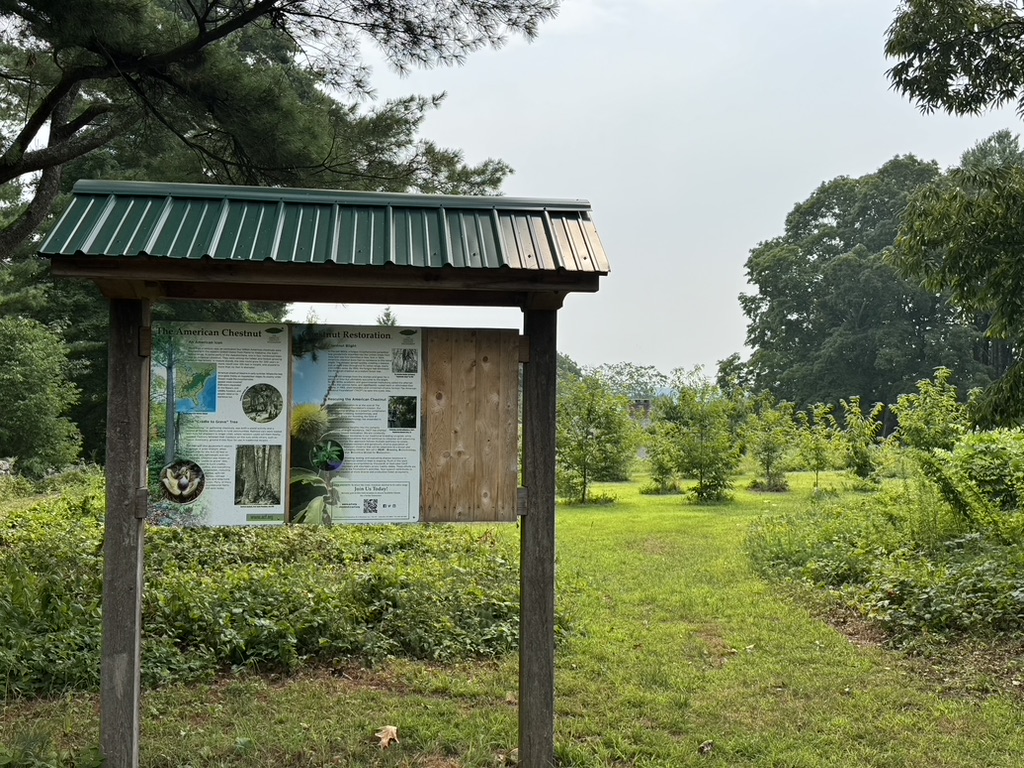
American Chestnut Tree Restoration Project at Cross Lots
During the early to mid-20th century, American chestnut trees were devastated by chestnut blight, a fungal disease that came from Japanese chestnut trees that were introduced into North America. It is estimated that the blight killed between three and four billion American chestnut trees in the first half of the 20th century, beginning in 1904. Within just 30 to 40 years, the blight swept across 180 million acres of eastern forests spanning from Maine to Georgia. By 1950, virtually all mature canopy trees were gone. Prior to the blight, the American chestnut made up roughly 25% of the eastern hardwood forest (often called the “Redwood of the East”). Its demise completely reshaped forest ecosystems, eliminated a massive yearly food source for humans and wildlife, and collapsed an entire lumber and rural nut economy.
The Essex Land Trust’s American Chestnut Restoration Project began as an idea around 2018, inspired by growing interest among volunteers and board members in helping to restore one of North America’s most important native tree species. The project was originally championed by volunteer Glenn Jacobsen, and after his illness and passing, fellow volunteers continued the effort in his honor.
Working closely with the Connecticut Chapter of the American Chestnut Foundation, the land trust established a Germplasm Conservation Orchard (GCO) in 2022. Unlike genetically engineered restoration efforts, the orchard consists entirely of native Connecticut American chestnuts, representing five different wild strains collected from locations around the state, including New London County, Middletown, Windsor, and other Connecticut sites. The purpose is to preserve native genetics while identifying naturally blight-resistant trees through selective cross-pollination.
Establishing the Orchard
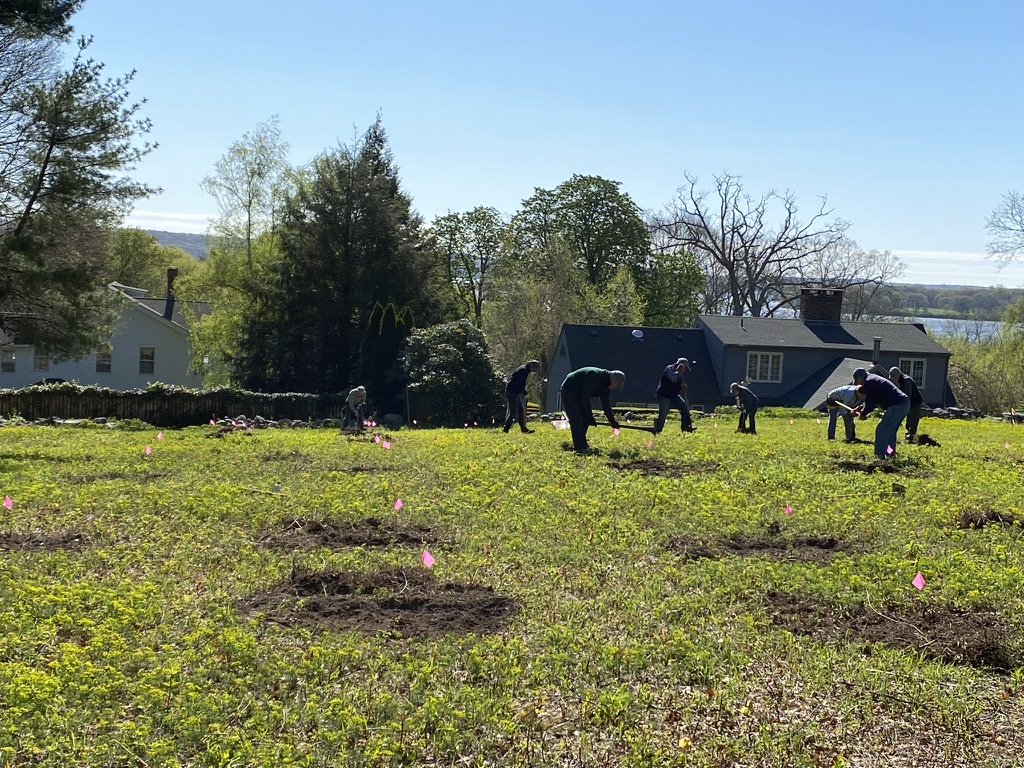
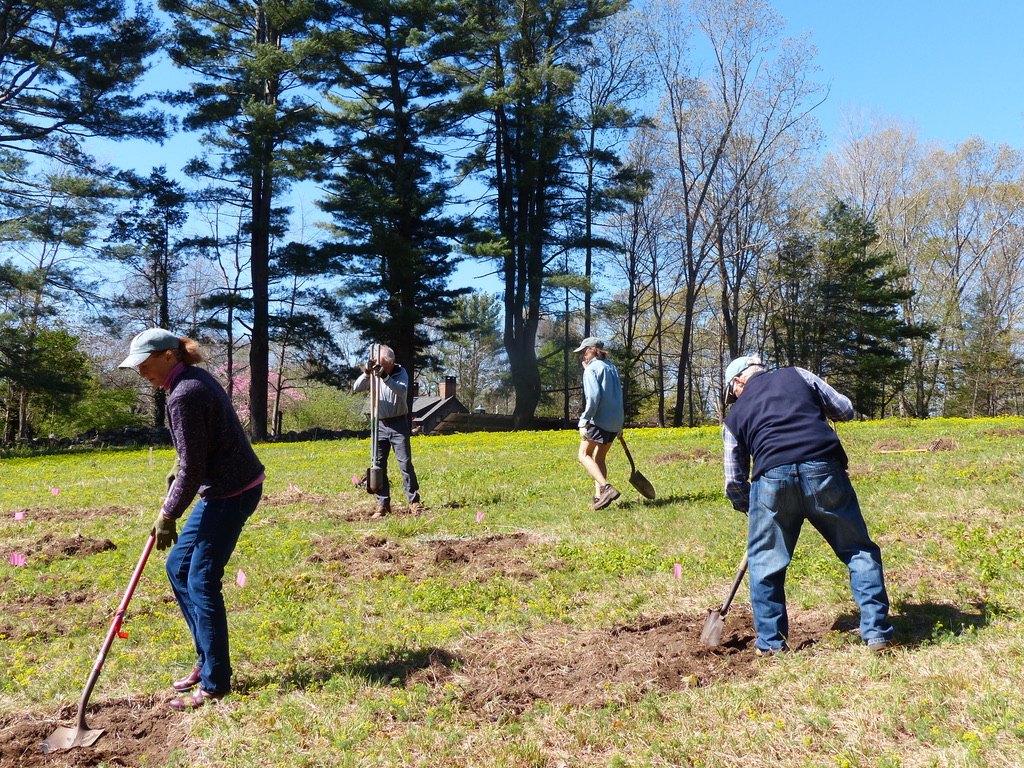
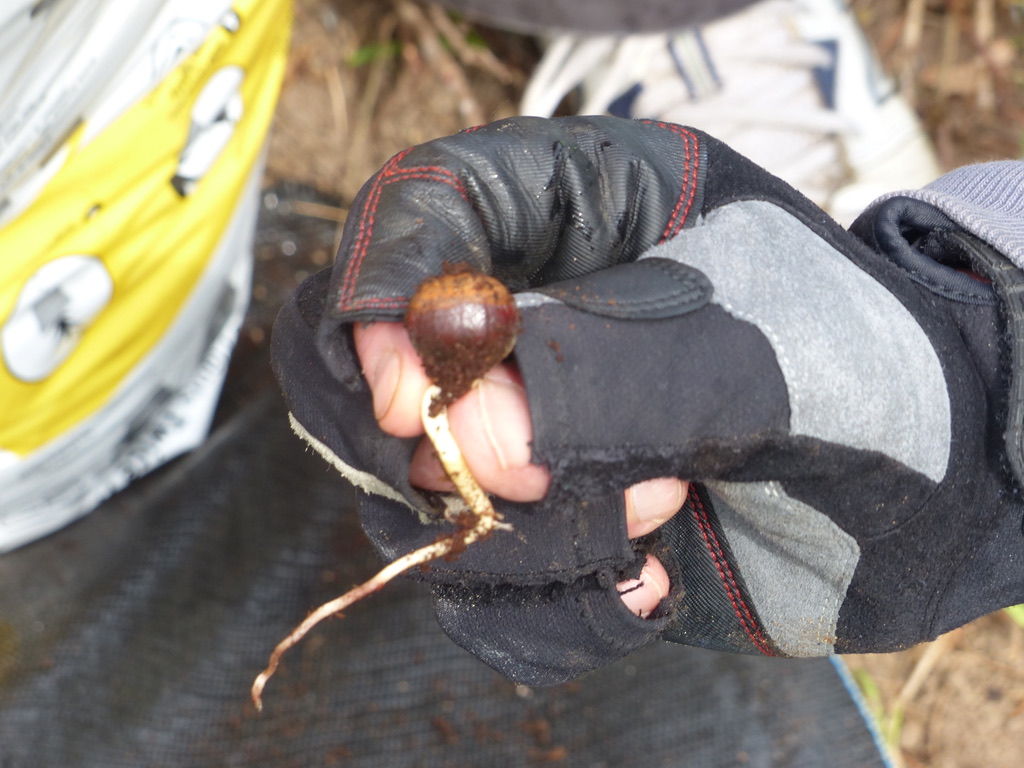
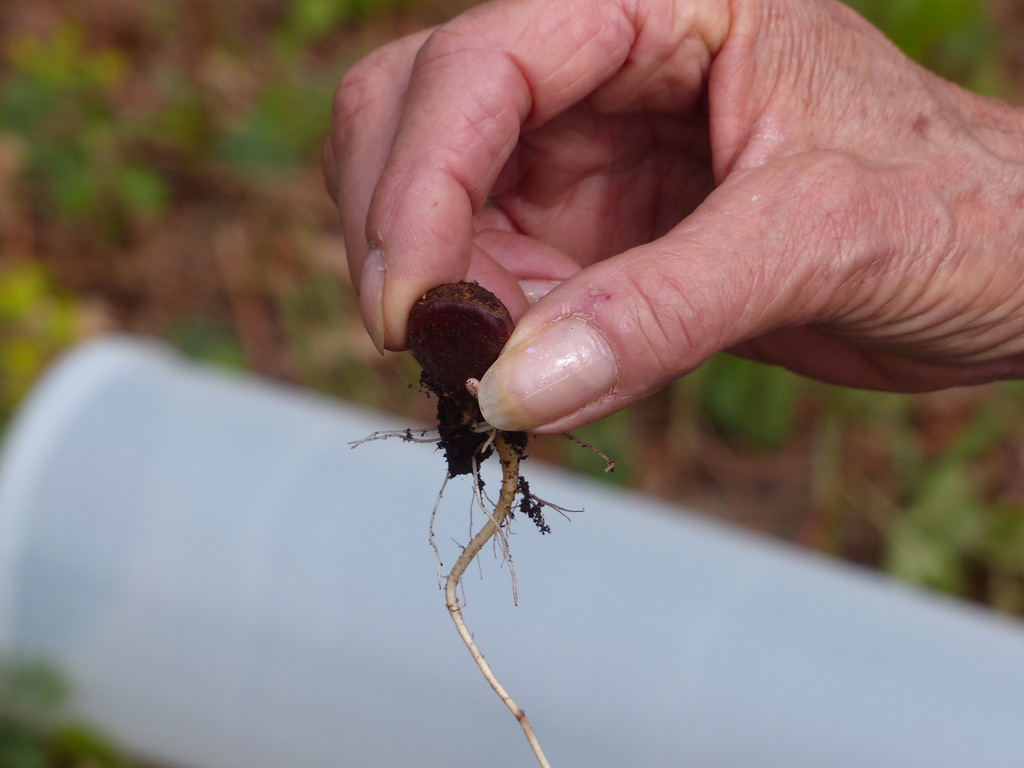
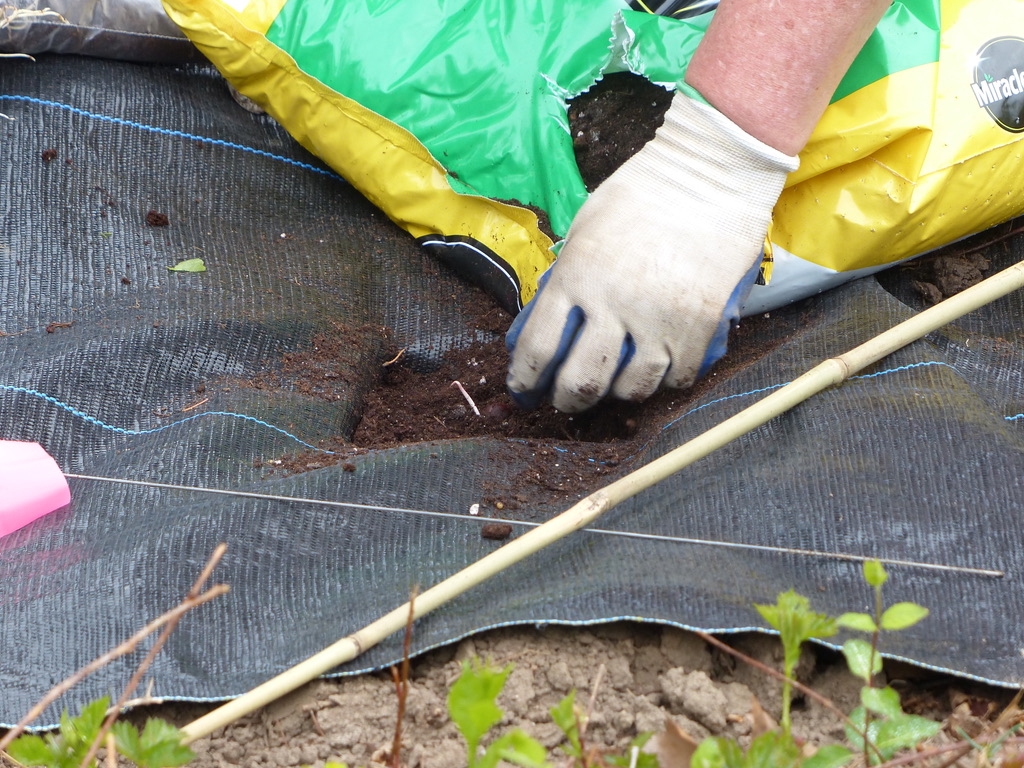
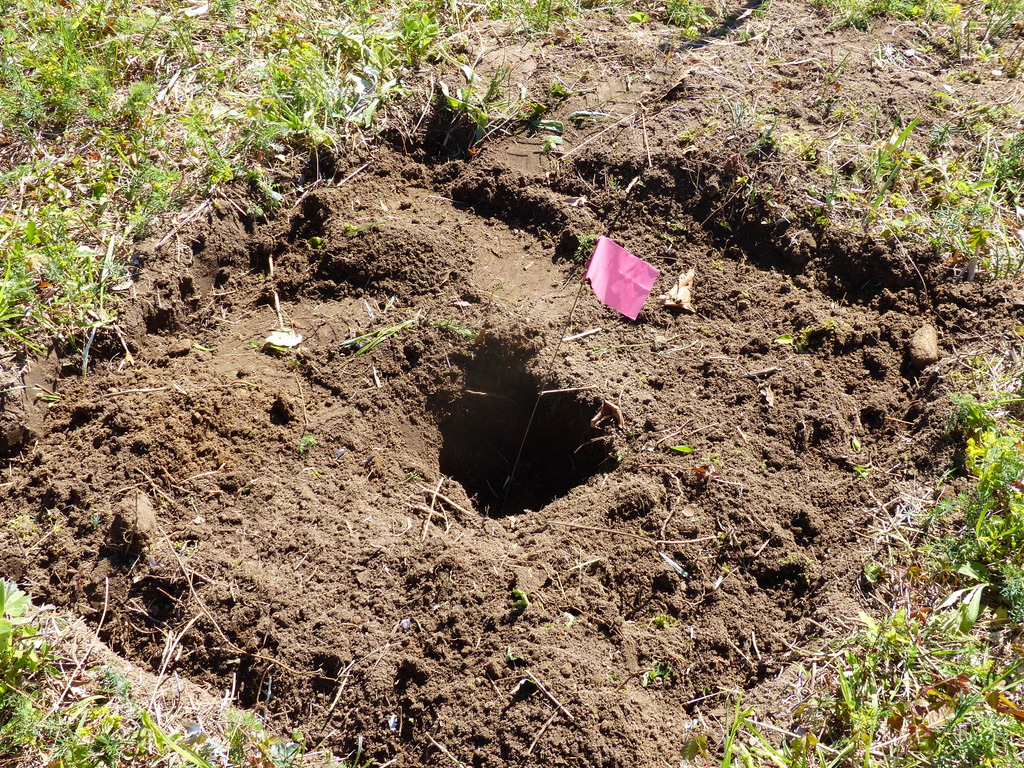
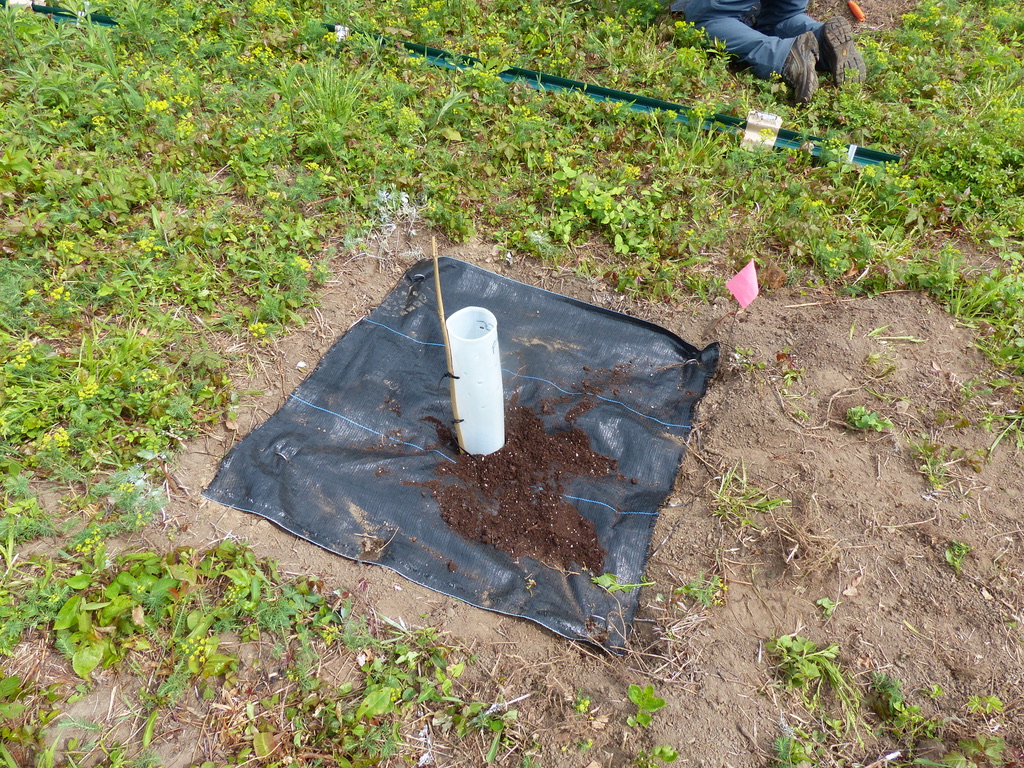
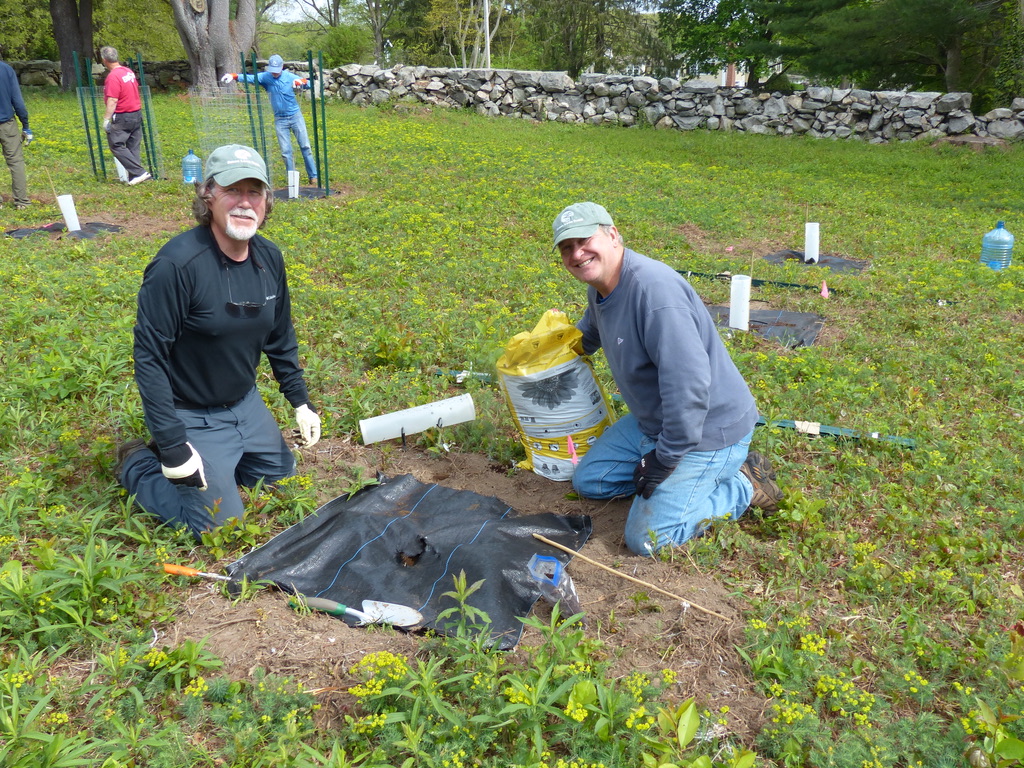
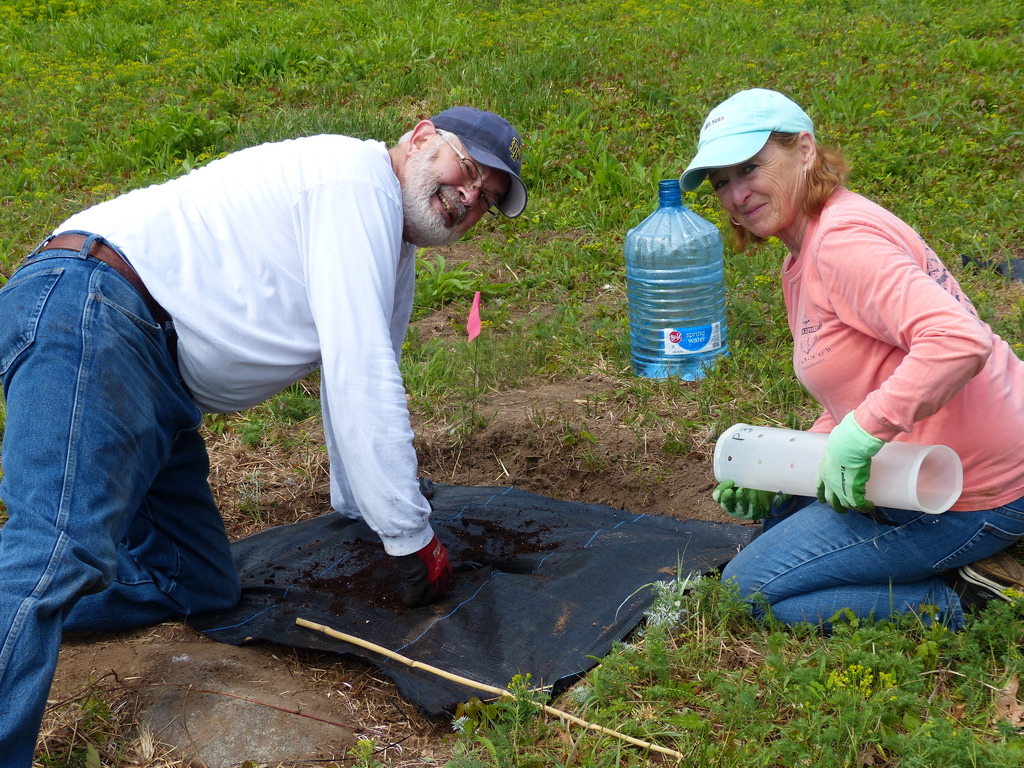
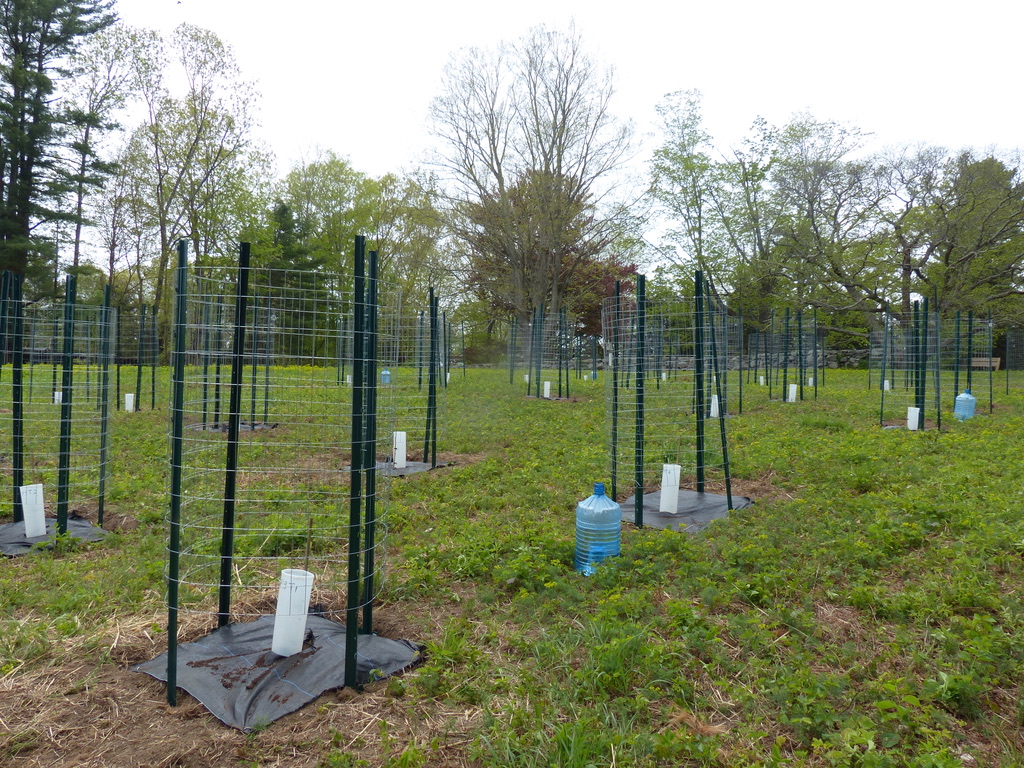
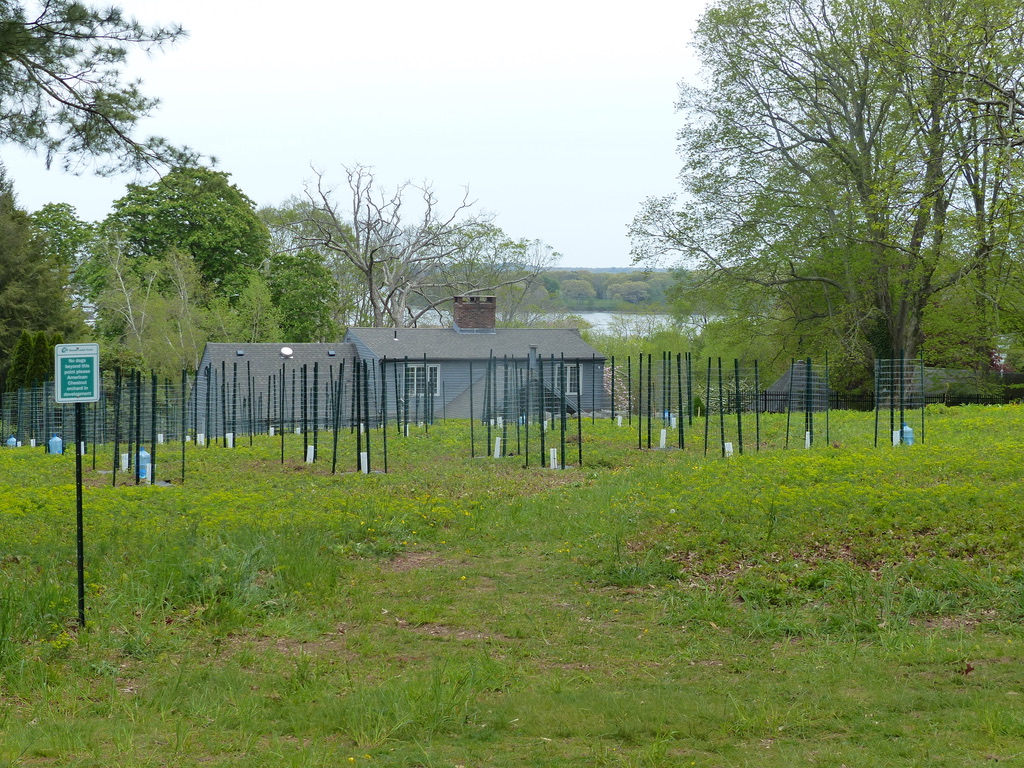
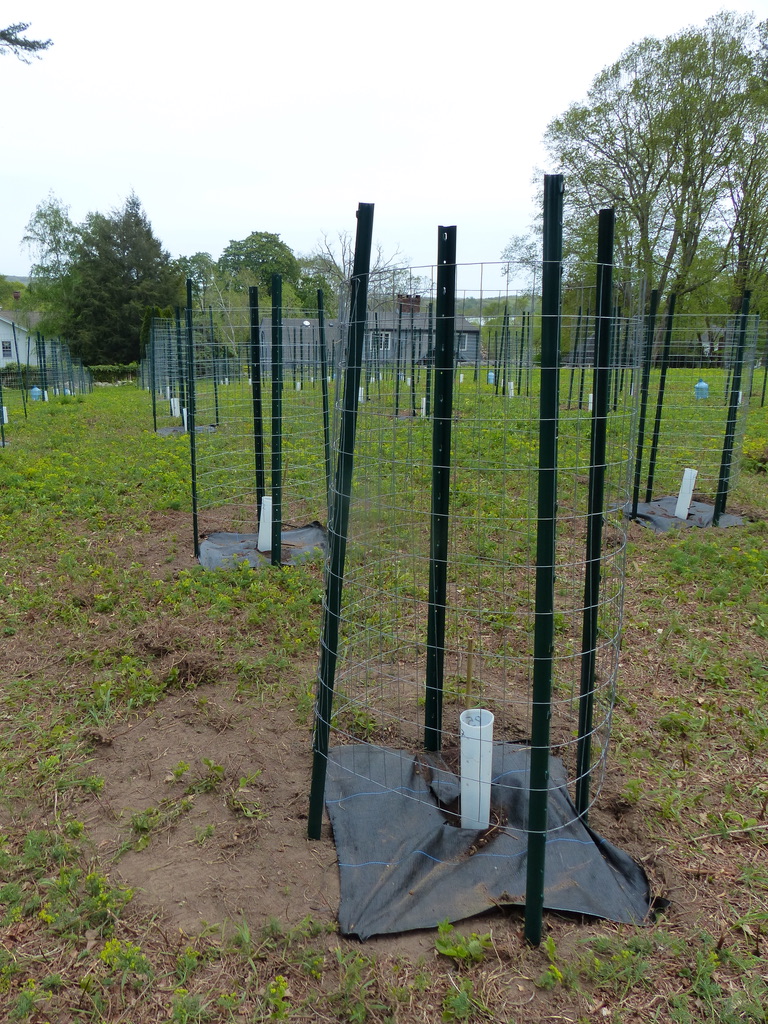
In spring 2022, approximately 25 Essex Land Trust volunteers spent several hours preparing the orchard. Following guidance from the Connecticut Chapter, volunteers created fifty carefully prepared planting sites arranged in five plots of ten trees each. Every planting location was cleared, covered with weed cloth, amended with nutrients, and planted according to strict protocols developed by the American ChestnutFoundation.
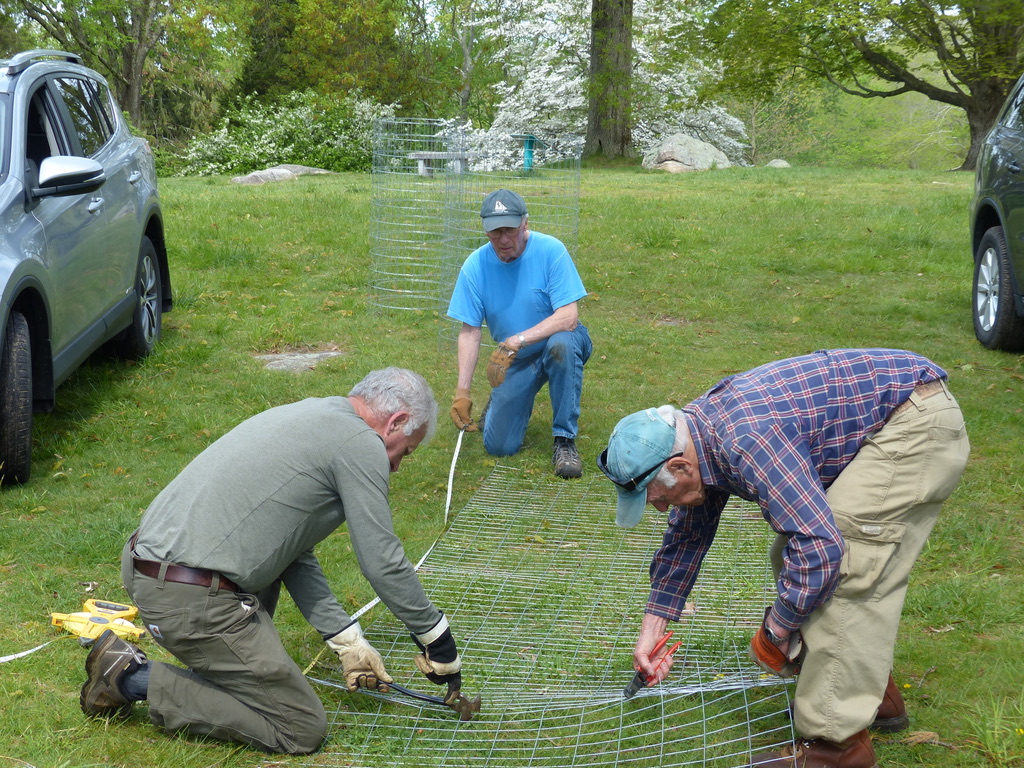
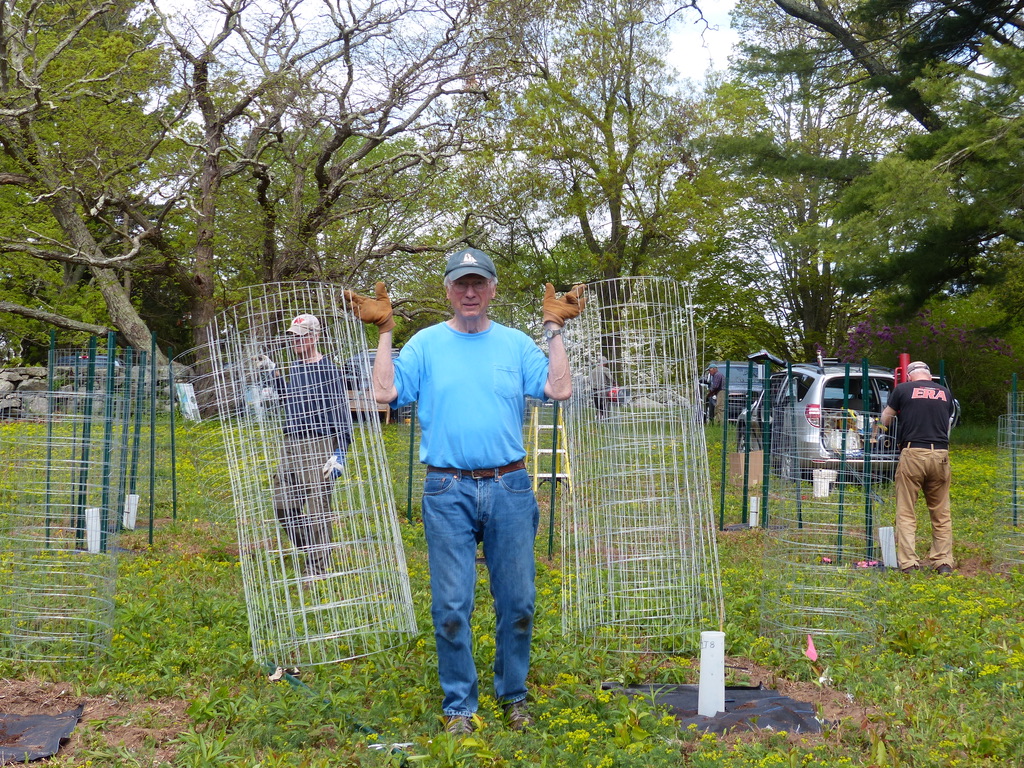
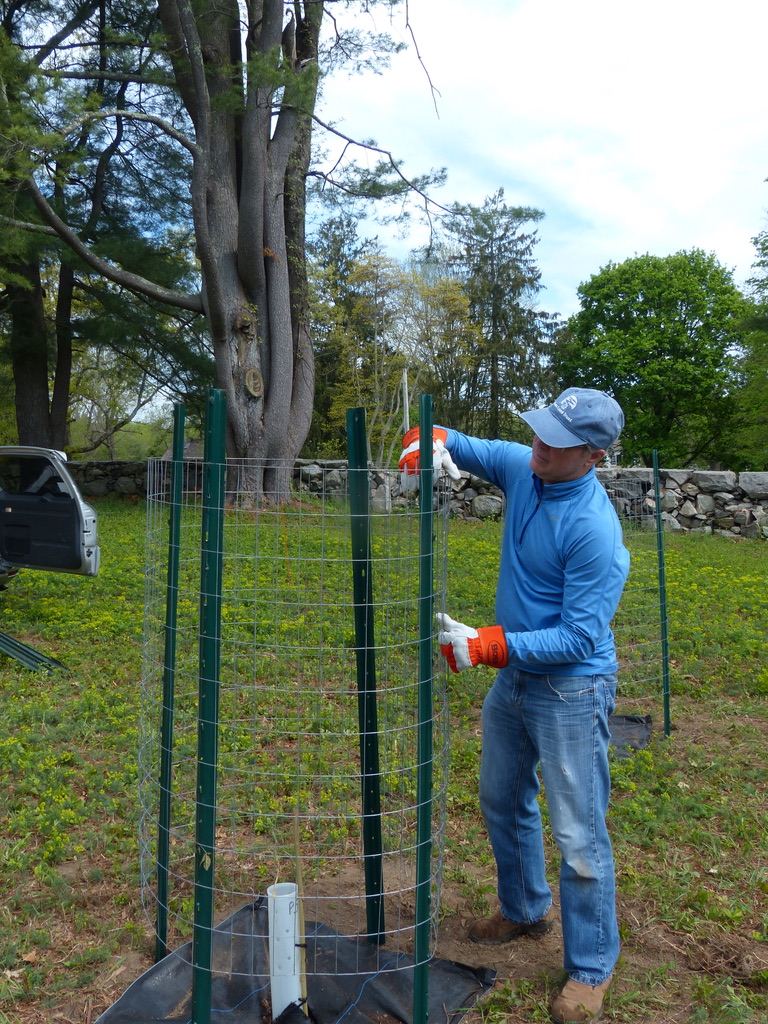
The first several years required intensive stewardship. Volunteers installed protective tubes and fencing to prevent damage from deer, rabbits, dogs, and other wildlife, while organizing weekly watering schedules during dry periods. Although a few nuts failed to germinate and several seedlings were later lost during winter, replacement greenhouse-grown seedlings supplied by the Connecticut Chapter kept the orchard nearly intact. Approximately 47 of the original 50 trees remain alive, an excellent survival rate.


A Milestone in Year Five
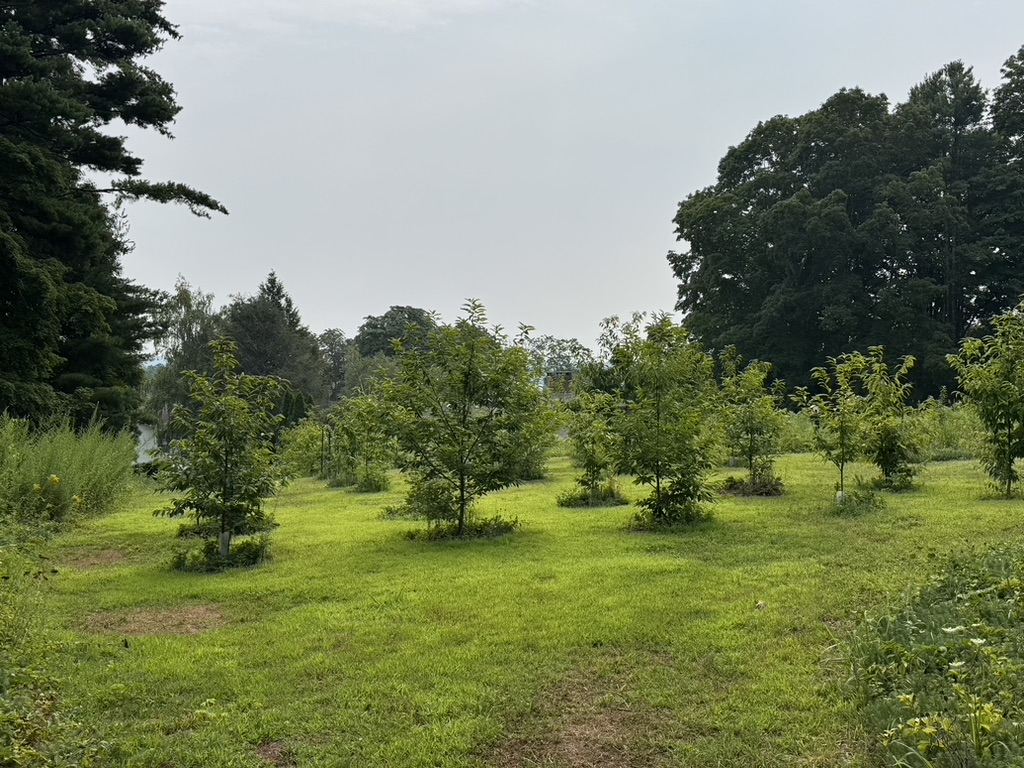
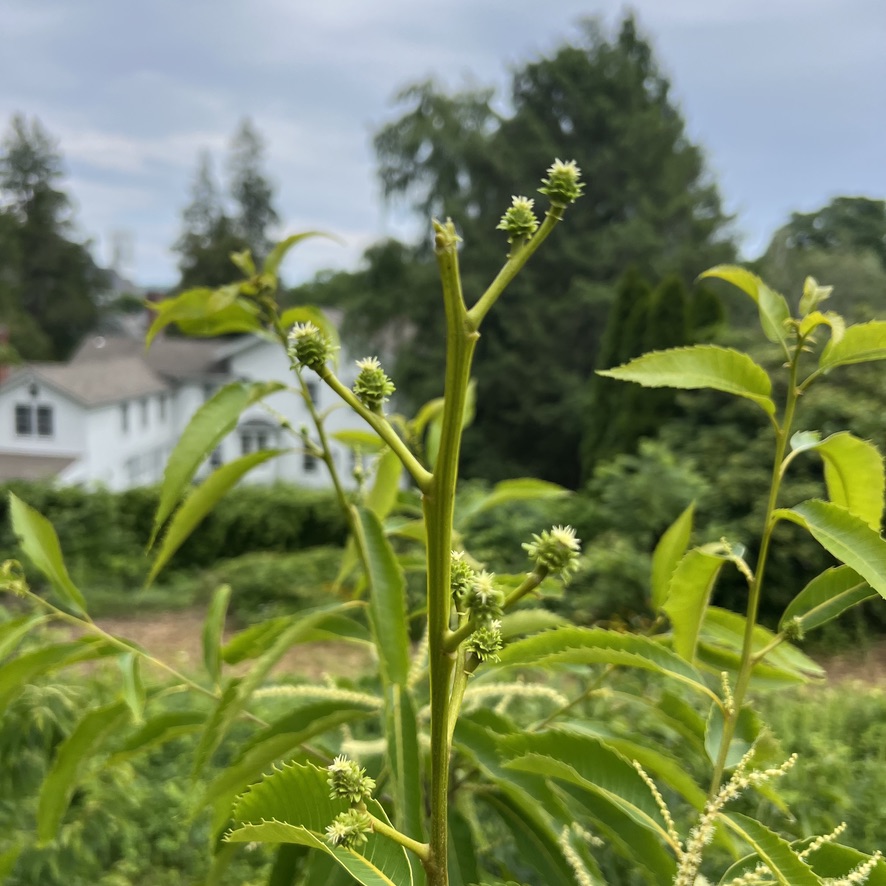
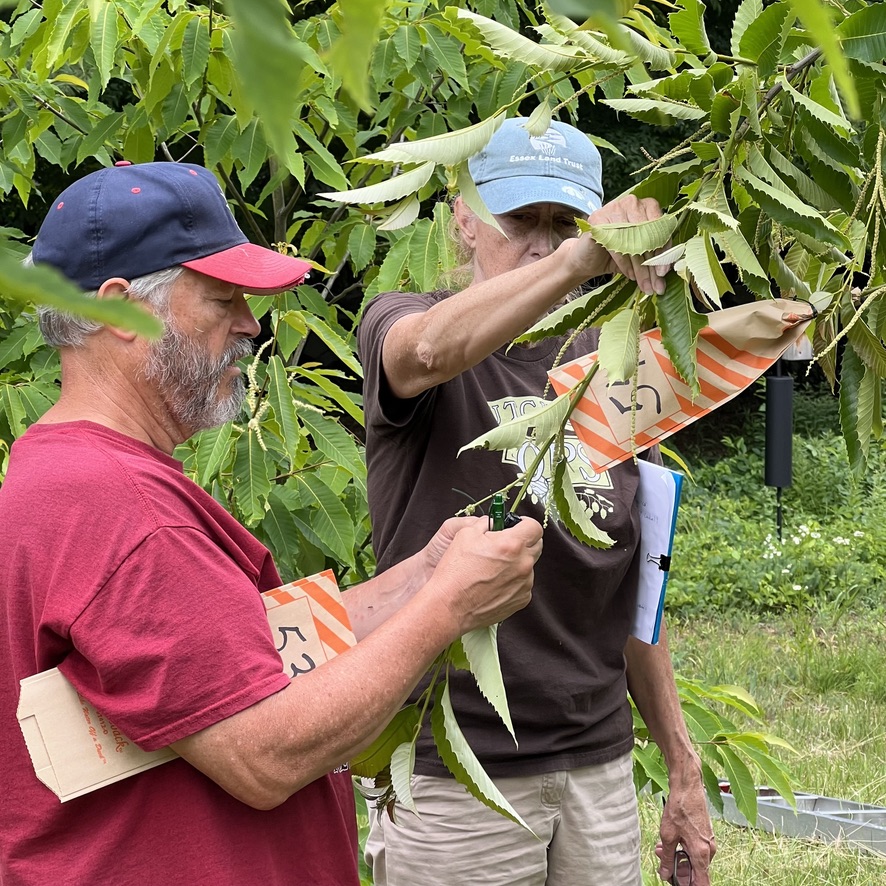
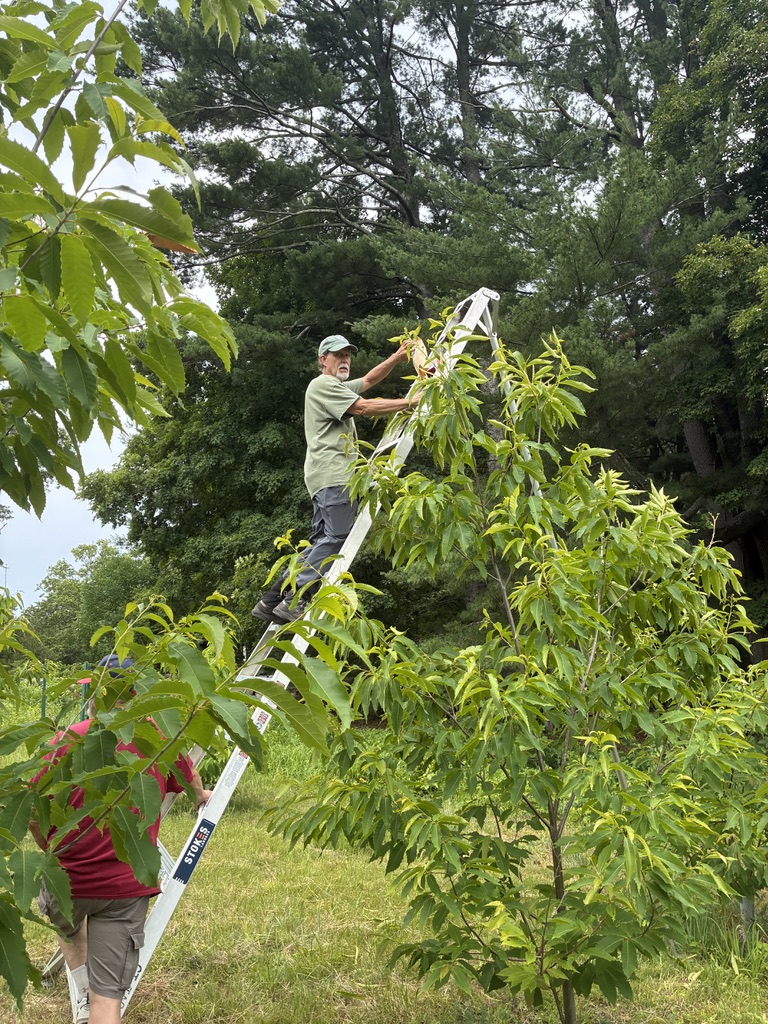
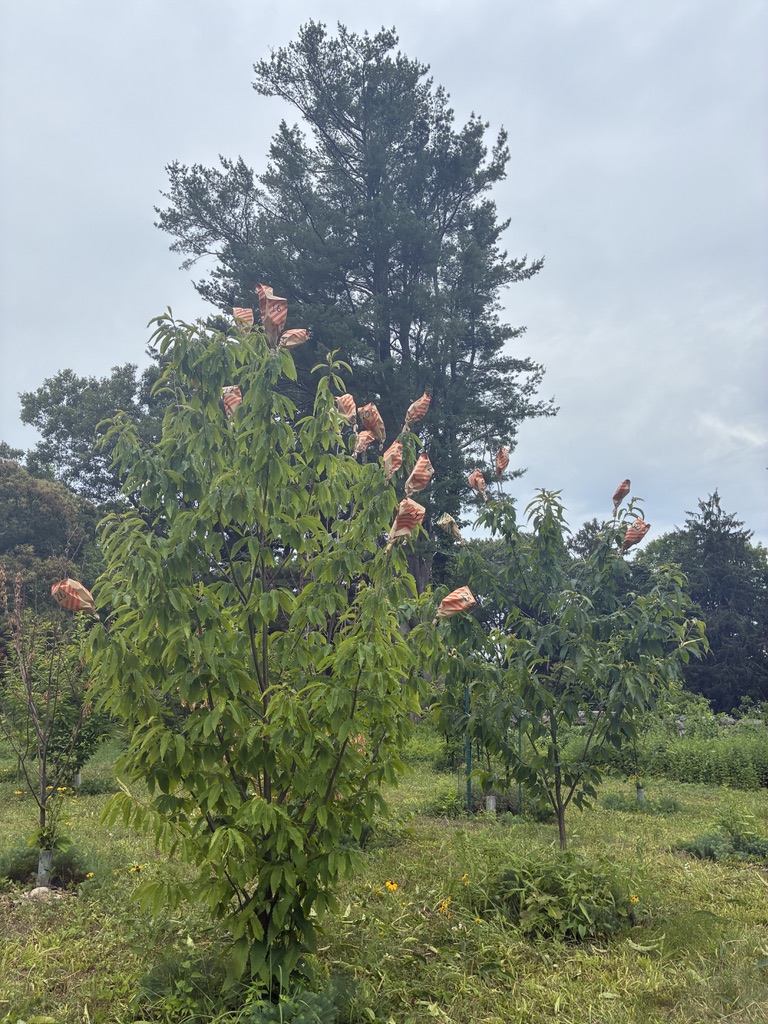
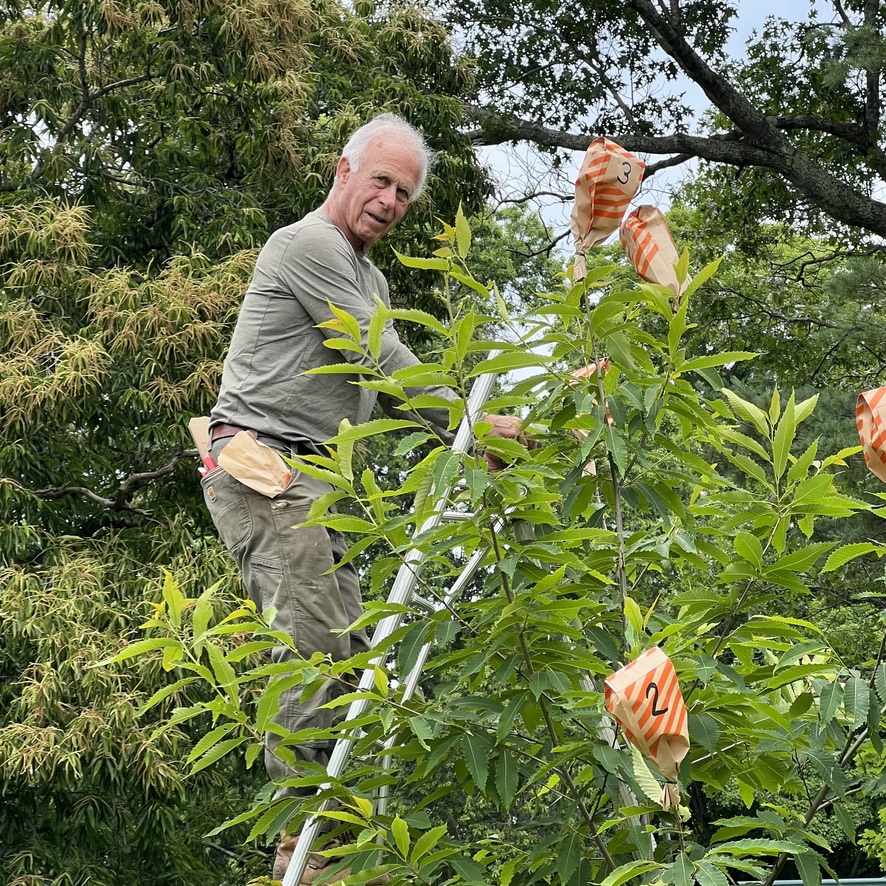
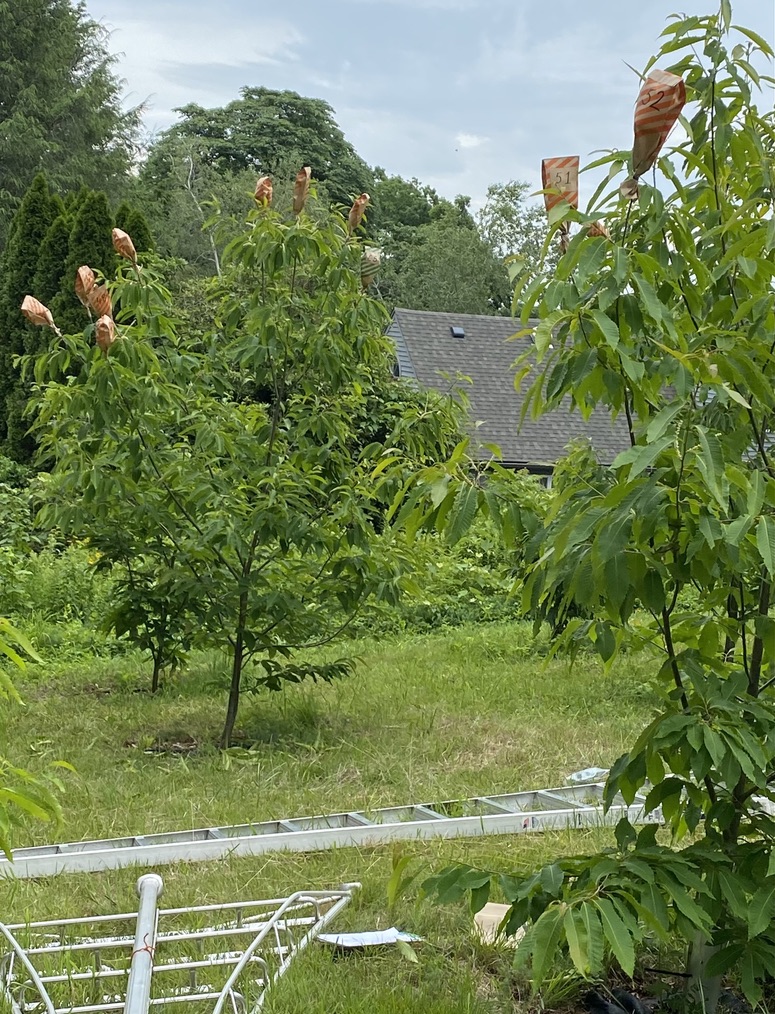
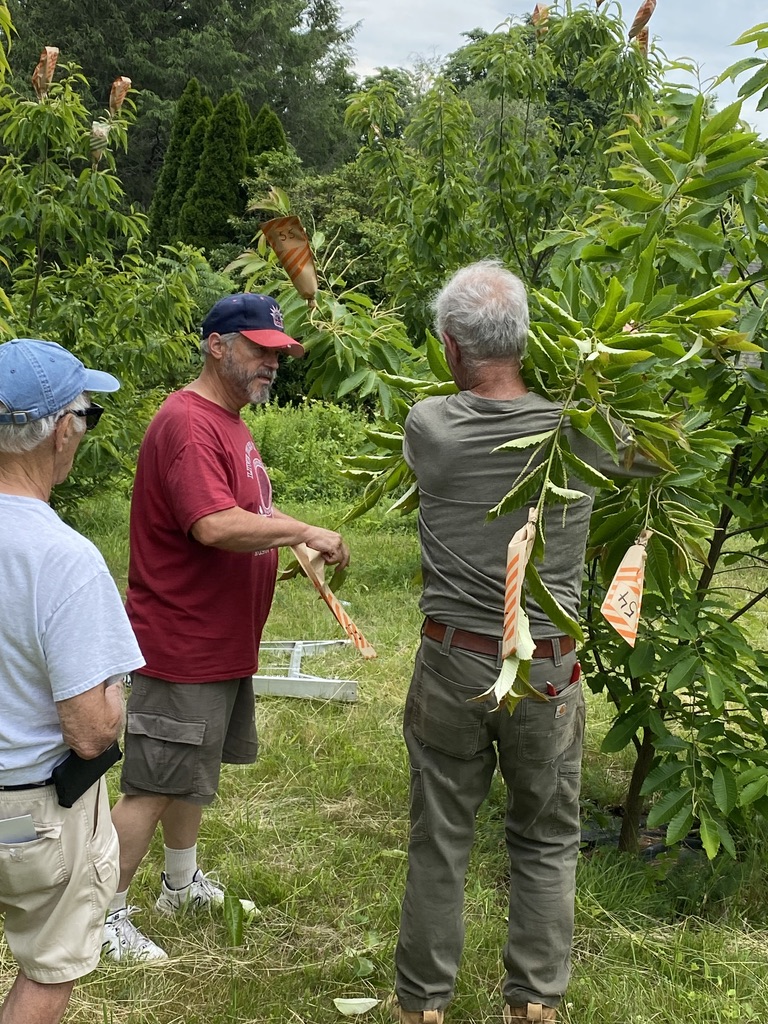
The orchard has now reached its fifth growing season, the point at which American chestnuts typically begin flowering. During the summer of 2026, volunteers observed both male and female flowers developing on several trees. Because American chestnuts cannot effectively self-pollinate—and because nearby Asian chestnut trees could produce unwanted crosses—the Connecticut Chapter supervised a meticulous hand-pollination process. Pollen collected from selected trees within different orchard plots, along with pollen from another Connecticut orchard in Middletown, was carefully transferred onto receptive female flowers. Each pollinated flower was then re-bagged to prevent accidental pollination from outside sources. Additional “control” bags were left un-pollinated to verify that any resulting nuts came only from the intended crosses. If successful, the pollinated flowers will produce nuts this fall. Those nuts will be harvested, documented, and used by the Connecticut Chapter to establish future conservation orchards, continuing the long-term effort to restore naturally blight-resistantAmerican chestnuts throughout Connecticut.
Looking Ahead
The project has expanded beyond the original orchard. Volunteers have also discovered surviving American chestnut root systems on several Essex Land Trust preserves. New shoots from these ancient rootstocks have been carefully transplanted into the orchard, preserving additional local genetics that survived the original chestnut blight. While some trees have begun showing early signs of chestnut blight—as expected at this stage—the appearance of these symptoms is considered part of the evaluation process. The goal is not to eliminate the blight, which now exists naturally in eastern forests, but to identify trees that possess enough natural resistance to survive, reproduce, and eventually help restore healthy American chestnut populations.
Why This Matters
This project is about far more than growing trees. Before the chestnut blight arrived in the early 1900s, American chestnuts dominated eastern forests and supplied durable timber, abundant wildlife food, and countless products used by communities throughout the region. By partnering with the Connecticut Chapter of theAmerican Chestnut Foundation, the Essex Land Trust is contributing to a state wide conservation effort that could eventually return this iconic tree to Connecticut’s forests. Although restoration will take decades, every successful pollination and every healthy seedling represents another step toward bringing back one of North America’s greatest native trees.